Why Your Roof Warranty Depends On Who Installs It
A roof comes with two separate warranties, and the more valuable one can be voided by the installation rather than by the materials.
September 15, 2026 · 4 min read
When people compare roofing quotes they tend to compare materials and price. The warranty position is usually skimmed, partly because it sounds like paperwork and partly because most people assume there is only one warranty.
There are two, they cover different things, and one of them is much easier to lose than the other.
Warranty one: the workmanship
The workmanship warranty is the contractor's own promise about the quality of the installation. It is the one that covers the work rather than the product.
At CBS Roofing and Waterproofing most projects carry a five year workmanship warranty, and tile roof installations carry an extended eight year warranty. Tile gets longer because so much of a tile roof's real performance depends on how carefully it was set.
A workmanship warranty is only ever as good as the company standing behind it. A five year promise from a business that has been trading for eighteen months is a different proposition from the same promise from one that has been in the same town since 1997.
Warranty two: the manufacturer's
The second warranty comes from whoever made the materials. It is often the longer and more valuable of the two, and it is the one people assume is automatic.
It is not. Manufacturers publish installation guidelines, and the cover is conditional on the roof being installed according to them. Fixing patterns, underlayment specification, ventilation requirements and how details around penetrations are handled are all part of that.
Install the same materials outside those guidelines and the manufacturer can decline the claim. You will have paid for premium materials and be holding a warranty that does not respond.
What certification actually buys you
This is where manufacturer certifications stop being a badge on a website and start being worth something. We are a Master Elite GAF installer, which is a tier awarded by the manufacturer rather than something a company can award itself.
Our crews are trained and certified across shingle, tile, metal and flat roofing systems, and we follow manufacturer guidelines specifically so the product warranties remain valid. We have also won an ATAS Metals award for our metal work, and we are an active member of the local roofing association.
The practical translation is that the certification is not there to impress you. It is there so that the more valuable of your two warranties still works in ten years.
The things that quietly void cover
A few of the common ones are worth knowing before you choose anybody.
- Installation that departs from the manufacturer's published guidelines.
- Inadequate attic ventilation, which some manufacturers treat as a condition of cover.
- Unapproved repairs or alterations made later by someone else.
- Neglect, in the sense of damage that was allowed to run rather than repaired.
That last one is the most common. Warranties cover defects, not consequences of ignoring a problem for two seasons, which is another argument for regular inspections and prompt repairs.
Licensing and insurance, which is a separate question again
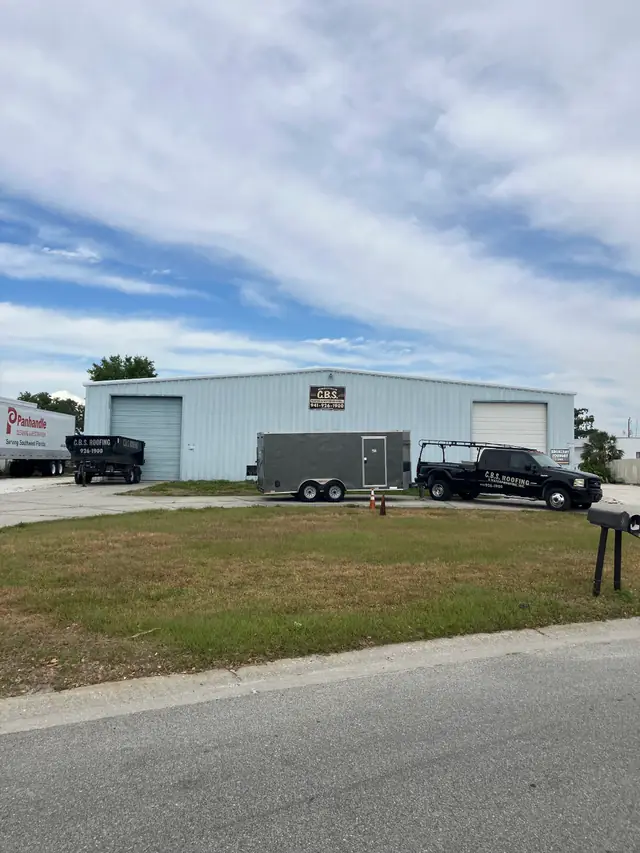
Warranty cover is not the same as being covered while the work happens. Before anyone gets on your roof, check the licence and the insurance. We are state certified and fully insured under Florida roofing licence CCC057589, and that number is on the truck as well as on this site.
If a contractor is reluctant to give you a licence number, that is the whole answer to the question.
Keep the paperwork, and keep the photographs
A warranty you cannot evidence is a difficult warranty to claim on. Keep the proposal, the invoice, the warranty documents and the material specification together somewhere you will still be able to find them in eight years.
Photographs of the work in progress belong in that file too. We document our work photographically as it goes, partly for insurance credit and partly because it is the only record of what is underneath a covering that will not be opened again for a long time. If you ever need to demonstrate how the roof was built, that is what does it.
If you are planning to sell
A recent roof is one of the few home improvements a buyer will ask direct questions about, and their inspector certainly will. Being able to produce the installer, the licence number, the workmanship warranty and the material specification turns a vague selling point into a concrete one.
Warranty terms differ on whether cover moves with the property, so if selling is on the horizon it is worth asking the question specifically rather than assuming either way. Ask before the work, not afterwards.
What to ask for in writing
- The workmanship warranty length, and exactly what it covers.
- The manufacturer's warranty on the specified materials.
- Confirmation that installation will follow manufacturer guidelines.
- The licence number and proof of insurance.
Any contractor worth using will hand all four over without hesitation. If you want to talk through the warranty position on your own roof, call the office on (941) 926-1900.
CBS Roofing & Waterproofing Inc., (941) 926-1900
Call (941) 926-1900More articles
Emergency Roofing: What To Do Immediately After Storm Damage
Extreme weather can leave a roof vulnerable in minutes, and the worst of it is rarely the part you can see from the driveway.
8 Ways To Protect Your Home And Extend Your Roof's Lifespan
A roof rarely fails all at once. It fails slowly, in a handful of predictable places, and most of those are cheap to stay ahead of.