Emergency Roofing: What To Do Immediately After Storm Damage
Extreme weather can leave a roof vulnerable in minutes, and the worst of it is rarely the part you can see from the driveway.
September 15, 2026 · 4 min read
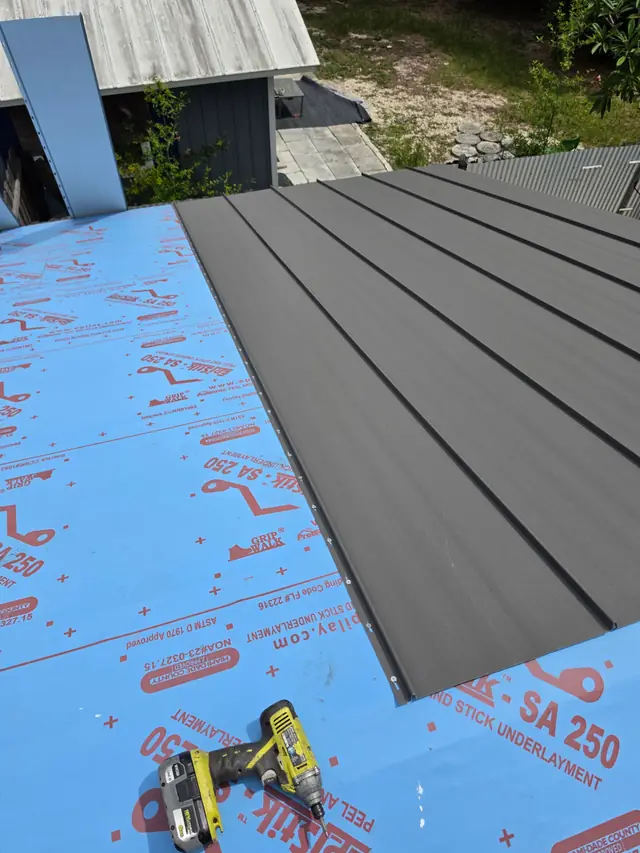
Wind, driving rain and flying debris can compromise a roof in a matter of minutes. The frustrating part, and the part that costs people money, is that a lot of that damage is not visible from the ground. A roof can look more or less intact from the driveway and still be letting water into the structure.
If a storm has just been through, there is an order of operations worth following. It is not complicated, but doing it in the wrong order is how people end up with a weaker insurance claim and a bigger repair.
1. Look for what you can see, from the ground
Start by walking around the house and looking up. You are checking for missing shingles, obviously damaged areas, lifted or displaced tiles, and fallen branches or debris sitting on the roof.
Stay on the ground while you do it. A roof that has just taken a storm may not be safe to walk on, and that is true whether or not it looks fine from below. Decking can be soft, fixings can be pulled, and wet surfaces at height are their own hazard. Nothing you can see from up there is worth a fall, and a roofer with a ladder and insurance can look at it properly within days.
2. Check inside for water before you check anything else
Water intrusion usually announces itself indoors before anyone notices anything overhead. Go through the house and look at ceilings and walls for stains, patches of discolouration, bubbling paint or damp. Then get into the attic if you safely can, and look for daylight, wet insulation or moisture on the timbers.
This matters because it tells you whether you have a roof problem or a roof emergency. A missing shingle with a dry attic underneath can wait a few days. An active drip cannot.
3. Protect what is underneath, temporarily
If water is coming in, move what you can out of the way. Get valuables, electronics and furniture clear of the affected area, and use temporary coverings such as plastic sheeting or tarps over anything that has to stay put.
Treat this as buying time rather than fixing anything. A temporary covering keeps the damage from spreading while you get a professional out. On the roof itself, a roofing contractor can apply a temporary fix before the permanent repair, which is usually the right sequence when a claim is involved.
4. Photograph everything, before anyone repairs anything
This is the step people skip, and it is the one that cannot be recovered afterwards. Take photos and video of everything: the exterior damage, the debris, the interior stains, the wet insulation, the ruined contents. Wide shots that establish where in the house you are, and close ones that show the detail.
Once the repair is done, the evidence of what happened is gone. Your insurer works from documentation, and so does the roofing contractor pricing the work. A good contractor will document the damage photographically for the claim as well. Two independent records are better than one, and yours is the one you control.
5. Book a professional inspection even if nothing looks broken
Hidden leaks and compromised materials are frequently not visible straight away. A roof can pass a glance from the ground and still have lifted fixings, damaged flashing or a section of underlayment that has been breached.
A proper inspection means someone on the roof, checking the things that fail first: flashing, fixings, ridge details, the areas around penetrations. If damage is found, it gets documented for the claim while the evidence is still there.
What to expect from the contractor
Ask three questions before anyone starts. Are they licensed and insured for work at height on your property. Will they document the damage for your claim. Will they deal with your insurance company directly, or is that left to you.
At CBS Roofing and Waterproofing we photograph storm damage for the claim, can put a temporary fix on before the permanent repair, and work directly with the customer's insurance company. We have been doing it in Sarasota since 1997, which means the crews have seen how these roofs fail here specifically rather than in general.
The short version
- Look from the ground, not from the roof.
- Check ceilings, walls and the attic for water before anything else.
- Move valuables and cover what has to stay.
- Photograph and film everything before any repair happens.
- Book an inspection even if it looks fine.
Choosing a team you trust for the emergency call is what turns a bad night into a manageable repair. If your roof has taken damage in Sarasota, Bradenton, Venice or North Port, call the office on (941) 926-1900 and we will get someone out to look at it.
CBS Roofing & Waterproofing Inc., (941) 926-1900
Call (941) 926-1900More articles
8 Ways To Protect Your Home And Extend Your Roof's Lifespan
A roof rarely fails all at once. It fails slowly, in a handful of predictable places, and most of those are cheap to stay ahead of.
Metal, Tile Or Shingle: Choosing A Roof For A Sarasota Home
Five systems, and they are genuinely different answers rather than cheap, middle and expensive versions of the same one.